Crude oil prices and crack spreads lift US gasoline: EIA
EIA says gasoline crack spreads have averaged about $1 a gallon above 2025 levels as refinery disruptions abroad tighten supply; US regular gasoline hit $4.07.
| Item | Figure |
|---|---|
| NY Harbor gasoline crack spread, since May | about $1/gal above 2025 average |
| 2025 crack spread peak | about 60 cents/gal |
| US gasoline imports, since March | 32% below 2021-2025 average |
| NY Harbor distillate crack vs gasoline, since March | 74 cents/gal higher on average |
| Distillate inventories, week ended Aug 28 | 14% below five-year average |
| Gasoline inventories, week ended Aug 28 | 6% below five-year average |
| US regular retail price, Monday before Labor Day | $4.07/gal |
WASHINGTON - Refining margins as well as crude oil prices are driving what American drivers pay, the U.S. Energy Information Administration said in a Sept. 4 analysis. Since May, the gasoline crack spread in New York Harbor has averaged about $1 per gallon higher than in 2025, when it peaked at around 60 cents.
Crack spreads and crude oil futures
A crack spread measures the profit from turning crude oil into products like gasoline and diesel. EIA defines one common version as the wholesale price of a gallon of refined product minus the spot price of a gallon of crude. For the pump-price analysis, the agency measured refinery margin against Brent crude spot prices. Traders who follow crude oil futures often track the same spread because it shows how much of a rise at the pump comes from crude itself and how much comes from refining.
EIA attributes the wide gasoline spread mainly to tight global supply, citing disruptions to refining in Russia, China and the Middle East. Since March, U.S. gasoline imports, including blending components, have run 32% below the 2021-2025 average. Limited Jones Act waivers have allowed some Gulf Coast shipments to partly offset the shortfall on the coasts, which rely on imports.
Distillates tighter than gasoline
Spreads are wider still for distillate fuel oil and jet fuel because the disrupted refineries tended to supply more of those products to world markets. Since March the New York Harbor distillate crack spread has averaged 74 cents per gallon above gasoline’s. U.S. refiners have shifted yields toward distillate and jet fuel to capture those margins.
In the week ended Aug. 28, distillate stocks were 14% below the five-year average, against 6% for gasoline. EIA said international demand for distillate is especially high because of lost output at Russian and Middle Eastern plants that yield relatively large shares of it.
How EIA splits the pump price
The agency’s chart breaks the retail price into three parts. Crude oil is the Brent spot price converted to dollars per gallon. Refinery margin is the New York Harbor wholesale gasoline price minus that Brent price. Retail, distribution and taxes is the national average retail price minus the wholesale price. The data for the week ending Sept. 5 are estimates based on figures through Sept. 3.
EIA says tighter global supplies and higher prices have both raised the cost of imported gasoline and increased demand for U.S. gasoline exports.
Retail prices by region
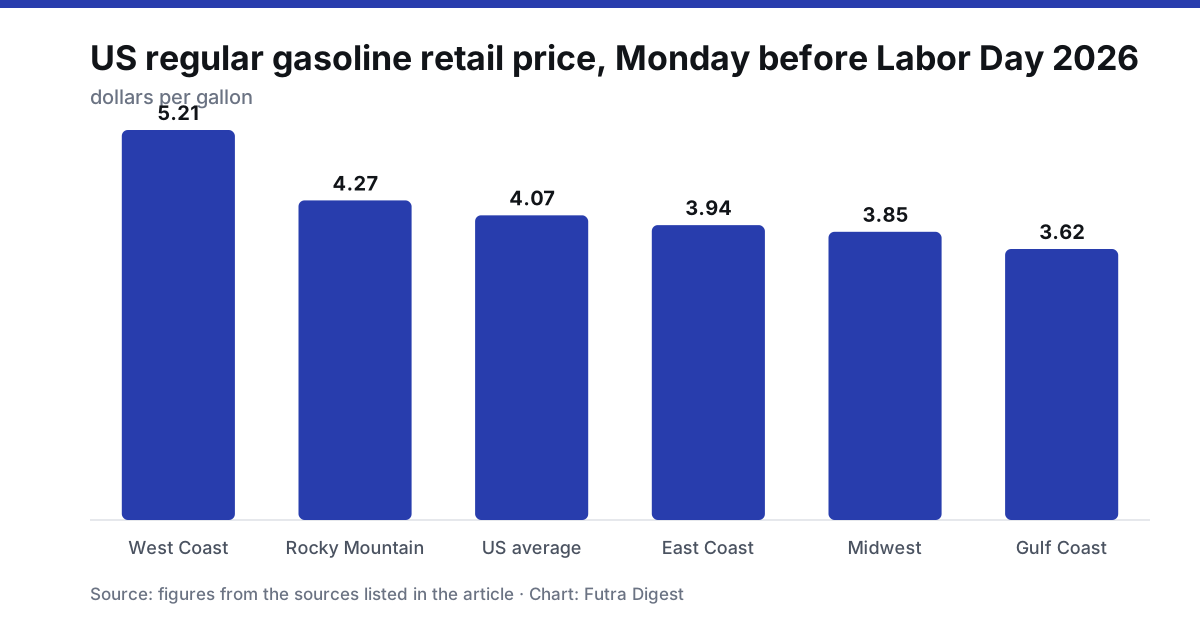
On the Monday before Labor Day, regular gasoline averaged $4.07 per gallon nationally. The West Coast averaged $5.21 and the Rocky Mountains $4.27, while the East Coast was $3.94, the Midwest $3.85 and the Gulf Coast $3.62.
Prepared with AI assistance from public sources and reviewed under our editorial policy. Not investment advice.